Développement d'une application mobile de livraison de repas
Développement d'une application mobile de livraison de repas
Pourquoi créer une application de livraison de repas pour une entreprise
Le marché de la livraison continue de croître : les utilisateurs ont pris l'habitude de commander depuis les cafés et les restaurants directement depuis leur smartphone. Une entreprise sans canal numérique propre est contrainte de verser aux agrégateurs une commission de 15–30 % sur chaque commande.
Une application propriétaire permet de réaliser plusieurs avantages :
- Commandes directes sans commission — l'argent reste dans l'entreprise et ne va pas à un intermédiaire.
- Programme de fidélité — les points et les offres personnalisées retiennent les clients plus efficacement que la publicité.
- Canal marketing direct — les notifications via Telegram sont lues plus volontiers que les e-mails.
- Analytique — les données sur les commandes aident à gérer le menu, la charge en cuisine et la logistique des coursiers.
📌 Selon des études sectorielles, les clients des applications propres aux restaurants dépensent en moyenne 20–30 % de plus par commande que les acheteurs via les agrégateurs.
Types d'applications de livraison de repas
Agrégateurs — plateformes pour opérateurs de livraison, et non pour un établissement individuel. Se connecter à eux ne remplace pas un service propriétaire.
Application d'un établissement spécifique — ce dont la plupart des restaurants et cafés ont besoin : menu, commande, paiement, programme de fidélité, suivi du coursier.
Fonctionnalités de l'application de livraison pour les utilisateurs
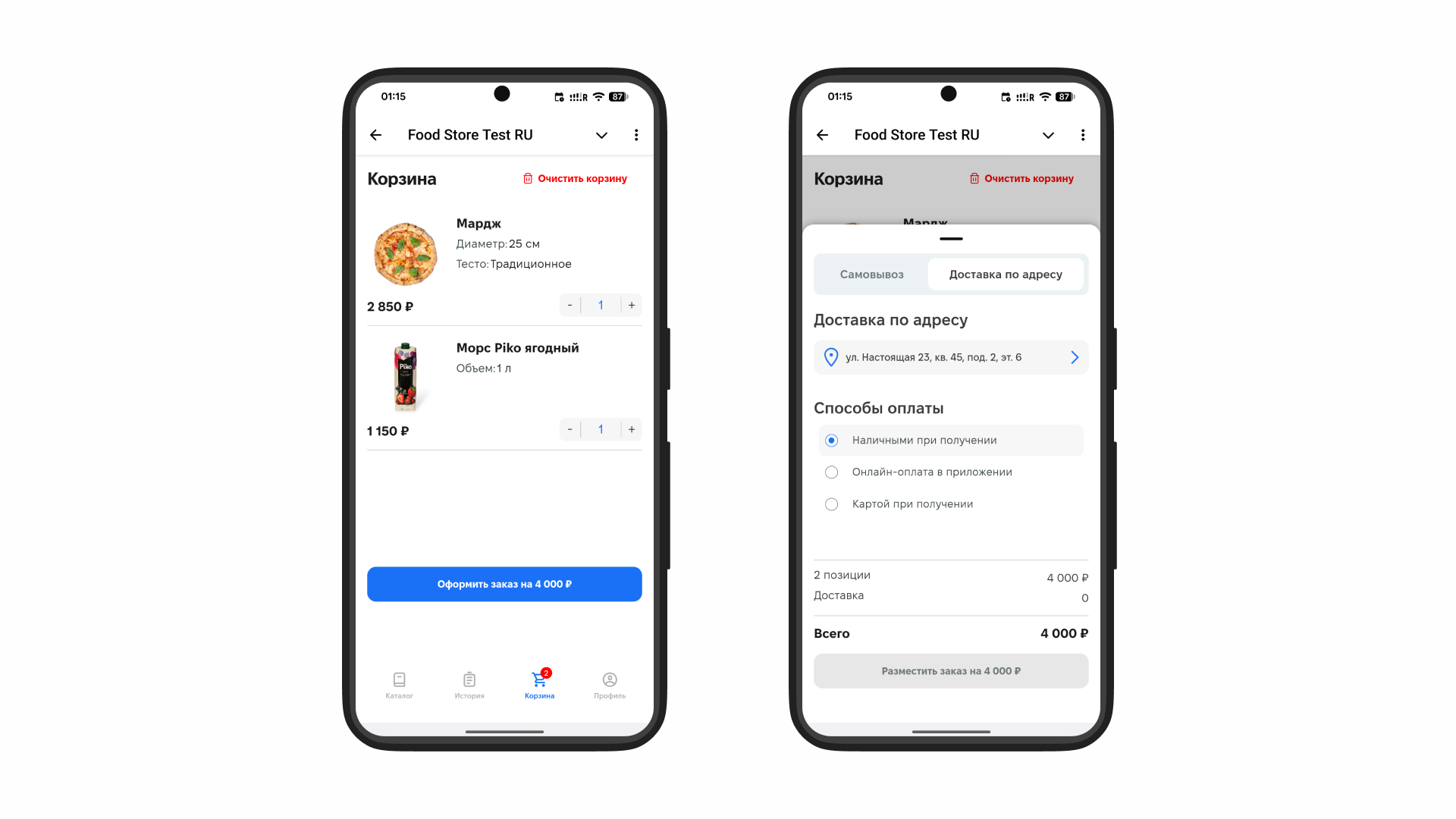
Sans ces fonctionnalités, l'application ne sera pas compétitive :
| Fonction | Pourquoi nécessaire |
| Catalogue avec photos et prix | Le client voit la composition et prend une décision |
| Panier et finalisation de la commande | Choix des plats, des suppléments, du mode de réception |
| Paiement en ligne | Cartes, Apple Pay, Google Pay — plus d'options, meilleure conversion |
| Suivi de la commande | Statut en temps réel : accepté, en préparation, chez le coursier |
| Espace personnel | Historique des commandes, adresses, réapprovisionnement rapide |
| Programme de fidélité | Points, cashback, offres personnalisées |
| Notifications | Statut de la commande, nouveautés, promotions |
Fonctions pour les propriétaires de l'application et le personnel de l'établissement
Tableau d'administration. Gestion du menu sans développeur : ajout de plats, modification des prix, indication « en rupture de stock ».
Gestion des commandes. Réception, répartition en cuisine, affectation des coursiers — dans une interface unique.
Analytique et CRM. Historique des achats, segmentation des clients, panier moyen, plats populaires selon les moments de la journée.
Intégrations. Connexion aux systèmes de caisse (iiko, r-keeper, Poster), aux passerelles de paiement, à la comptabilité.
Technologies et outils pour le développement de l'application
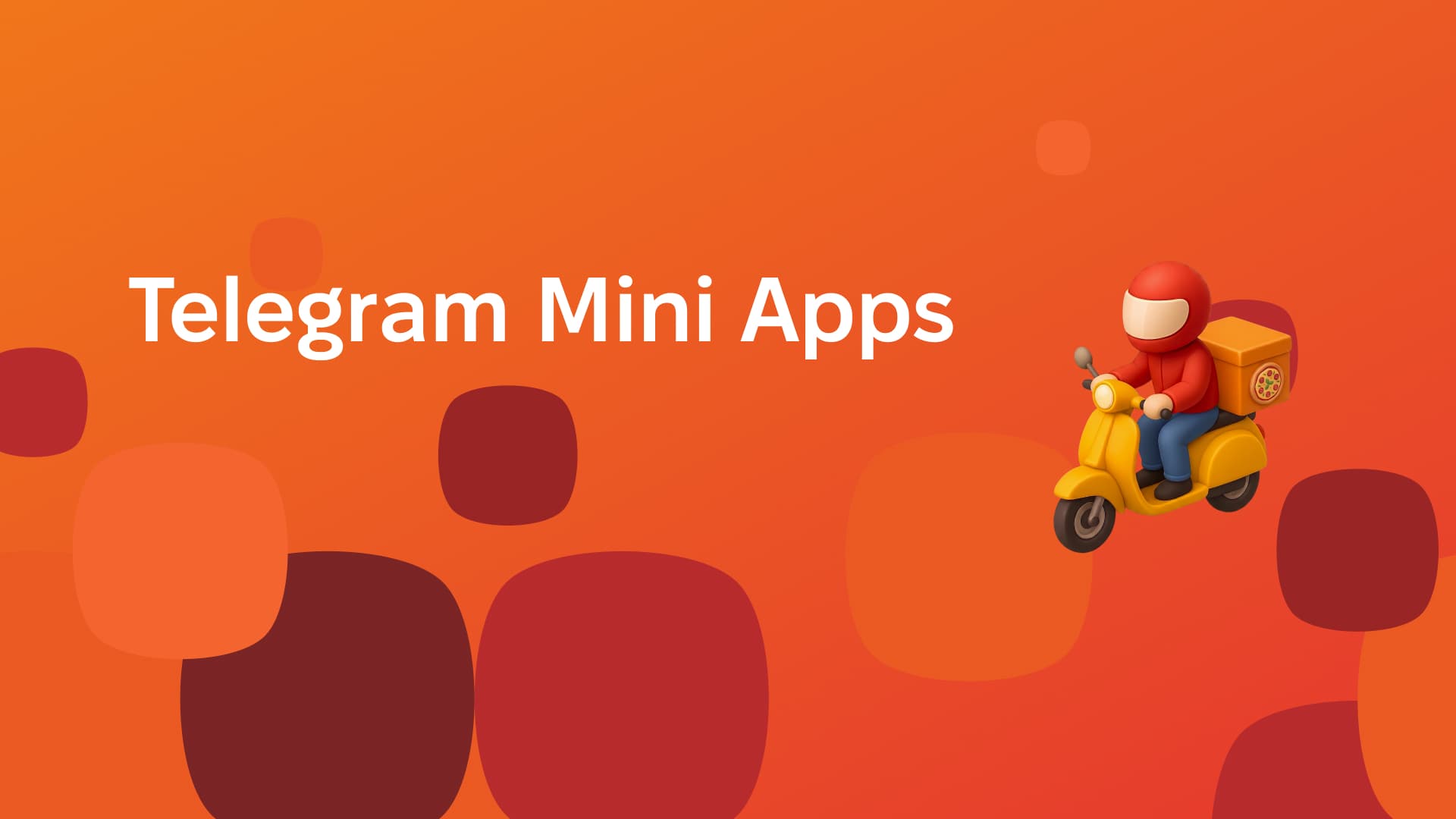
Telegram Mini Apps
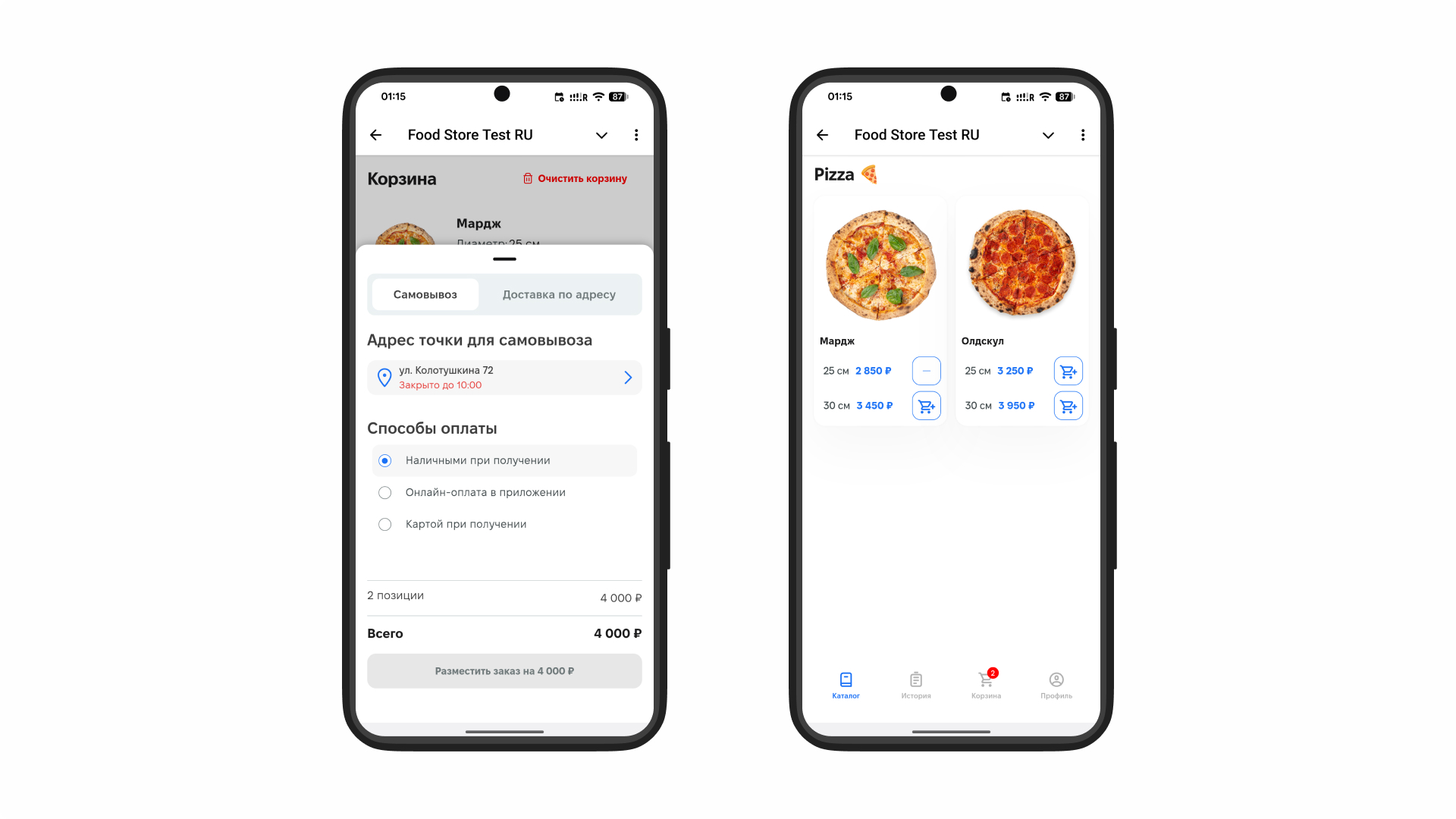
Telegram Mini App — une application web qui se lance directement à l'intérieur de Telegram. L'utilisateur retrouve une interface familière : catalogue, panier, paiement, statut de la commande. Il n'est rien à télécharger.
Pourquoi c'est avantageux pour un service de livraison :
- Le client est déjà authentifié via Telegram ID — pas de formulaires ni de mots de passe.
- Pas de validation dans l'App Store et Google Play — les mises à jour sont instantanées.
- Les notifications via un bot Telegram sont beaucoup plus souvent lues que les push classiques.
- Le développement d'une application de livraison via le constructeur Mini Apps Builder prend de 30 à 60 minutes — sans développeur et sans code.
Applications mobiles traditionnelles
Le développement natif pour iOS et Android — flexibilité maximale, mais coût d'entrée élevé (à partir de 20 000 $) et délais longs (4–8 mois). À chaque mise à jour, il faut attendre la validation dans les stores — 1–5 jours ouvrables.
⚠️ Mettre à jour d'urgence le menu ou lancer une promotion pendant que l'application est « en review » — impossible.
Constructeurs d'applications
Les plateformes no-code sont plus rapides qu'une équipe de développement, mais la publication dans l'App Store et Google Play reste nécessaire. Choix raisonnable uniquement si la présence dans les stores est primordiale.
Coût de développement d'une application pour les restaurants
Le coût pour créer une application de livraison dépend de l'approche :
Telegram Mini App (Mini Apps Builder) : ~50 $/mois. Lancement en 30–60 minutes. Menu, commande, paiement, fidélité, analytique — tout inclus. Sans coûts cachés.
Constructeur no-code : 30–150 $/mois + compte développeur (25 $ en paiement unique sur Google Play, 99 $/an sur l'App Store).
Développement natif : à partir de 20 000 $ par projet, 4–8 mois. Support — encore 15–20 % du coût par an.
| Critère | Telegram Mini Apps | Constructeur | Développement natif |
| Coût | ~50 $/mois | 30–150 $/mois | à partir de 20 000 $ |
| Temps jusqu'au lancement | 1 jour | Jours/semaines | 4–8 mois |
| Validation dans les stores | Pas nécessaire | Requise | Requise |
| Mises à jour | Instantanées | Après validation | Après validation |
Comment choisir la technologie adaptée
Choisissez Telegram Mini Apps si :
- Votre audience utilise activement Telegram (caractéristique de la Russie et de la CEI)
- Il faut démarrer rapidement avec un budget minimal
- La rapidité des mises à jour est importante : le menu, les promotions et les prix changent souvent
Choisissez un constructeur no-code si :
- La présence sur l'App Store/Google Play est essentielle
- Il n'y a pas de développeur, mais on veut un format d'application mobile familier
Choisissez le développement natif si :
- Il y a un routage complexe des coursiers et de fortes charges
- Des intégrations profondes avec des systèmes d'entreprise externes sont nécessaires
- Vous disposez d'un budget à partir de 20 000 $ et de 6+ mois avant la sortie
Pour la plupart des cafés et restaurants lors du lancement de la livraison, la stratégie optimale est de commencer par une Telegram Mini App, tester la demande et l'unit économie, puis évoluer ensuite si nécessaire.
Cas pratiques
Café avec livraison de quartier. Un petit établissement a lancé une Telegram Mini App via Mini Apps Builder en un jour : menu, panier, paiement, livraison à l'adresse. Après 3 semaines, le nombre de commandes a augmenté de 13 % grâce aux commandes passées via l'application par des clients qui passaient à proximité. C'est leur trajet habituel devant cet établissement, mais auparavant il n'était pas possible de commander à l'avance via une application et simplement récupérer la commande sans perdre de temps à attendre.
5 conseils pour créer un service demandé
1. Simplifiez le chemin vers la première commande. Moins il y a d'étapes entre « ouvrir l'application » et « confirmer la commande », plus la conversion est élevée. Ne forcez pas l'inscription pour la première commande.
2. Le menu est une vitrine. Des photos de qualité des plats influent directement sur le panier moyen. C'est un des investissements qui se rentabilisent le plus rapidement.
3. Lancez le programme de fidélité dès le premier jour. Les points et le cashback créent l'habitude de revenir. Dans Mini Apps Builder, cela se configure sans coûts supplémentaires.
4. Annoncez le lancement activement. QR code sur les emballages et les tables, post dans le canal Telegram, bonus pour la première commande via l'application. Sans promotion, même un bon service sera découvert par hasard.
5. Surveillez l'analytique. Quels plats ne sont pas commandés, quels sont les pics horaires, d'où viennent les clients — ces données sont moins coûteuses et plus rapides que n'importe quelle étude marketing.
Conclusion
La création d'une application de livraison de repas est aujourd'hui accessible à toute entreprise — quel que soit sa taille et son budget.
En bref :
- Développer une application mobile de livraison via Telegram Mini Apps — le démarrage le plus rapide : ~50 $/mois, lancement en un jour, mises à jour instantanées sans validation dans les stores. Le constructeur d'applications pour la livraison Mini Apps Builder ne requiert pas de développeur.
- Le constructeur no-code convient si la présence sur l'App Store/Google Play est nécessaire.
- Le développement natif — pour les projets à grande échelle avec de fortes charges, budget à partir de 20 000 $.
Pour les établissements qui n'ont pas du tout de vitrine en ligne, créer une application de livraison basée sur Telegram Mini Apps est une bonne option pour commencer, obtenir des premières données réelles — et évoluer ensuite.
- Pourquoi créer une application de livraison de repas pour une entrepriseTypes d'applications de livraison de repasFonctionnalités de l'application de livraison pour les utilisateursFonctions pour les propriétaires de l'application et le personnel de l'établissementTechnologies et outils pour le développement de l'applicationTelegram Mini AppsApplications mobiles traditionnellesConstructeurs d'applicationsCoût de développement d'une application pour les restaurantsComment choisir la technologie adaptéeCas pratiques5 conseils pour créer un service demandéConclusion