Desarrollo de una aplicación móvil para restaurantes en 2026
Desarrollo de una aplicación móvil para restaurantes en 2026
Introducción
El negocio de la restauración es una de las pocas áreas donde la transformación digital ocurre a la vista de todos. El cliente saca el smartphone, hojea el menú, hace el pedido — y todo esto antes de que el camarero se acerque a la mesa. Según investigaciones del sector, el 67% de las personas piden comida a través de servicios móviles, y los restaurantes con aplicación propia obtienen en promedio un 25% más de facturación.
Este artículo es un análisis práctico: qué tipos de aplicaciones existen para restaurantes, qué debe incluirse en ellas, cuánto cuesta crear una app para un restaurante y qué enfoque elegir según sus objetivos.
Ventajas de las aplicaciones móviles para restaurantes
Tener una aplicación móvil propia no es solo otro canal de ventas. Es la infraestructura de la relación con el cliente, que usted controla sin intermediarios.
Aumento del ticket medio. El sistema puede ofrecer automáticamente complementos: salsa, postre, bebida. Esto funciona mejor que la pregunta del camarero «¿algo más?».
Programa de fidelidad. Puntos acumulables, descuentos personalizados, bono en el cumpleaños — todo esto retiene al cliente y aumenta la frecuencia de pedidos.
Canal de marketing directo. Las notificaciones push y los mensajes en Telegram permiten comunicar una promoción sin gastos publicitarios en plataformas externas.
Analítica. La aplicación recoge datos: qué platos se piden más, cuál es la hora punta, quién es su cliente más valioso. Esto es la base para decisiones de gestión.
Independencia de los agregadores. La comisión de Yandex.Eda o Delivery Club es del 15–30% por cada pedido. Un programa propio compensa con el tiempo esta diferencia.
Qué tipos de aplicaciones hay para restaurantes
Todas las soluciones para un establecimiento se pueden dividir en tres tipos:
Aplicación-aggregador que reúne varios establecimientos (Yandex.Eda, Delivery Club). No tiene sentido que un restaurante cree su propio agregador: es un producto para los operadores de delivery.
Aplicación de un establecimiento concreto — lo que la mayoría de restaurantes y cafeterías necesitan. Incluye menú, pedido (salón + entrega), pago, fidelidad, reservas. Este es el formato que analizamos en detalle.
Aplicación enterprise — herramienta interna: gestión de turnos, cocina, almacén, finanzas. Normalmente es un proyecto separado complementario a la aplicación para clientes.
Funcionalidad de la aplicación para clientes de restaurantes
Sin estas funciones la aplicación móvil para un restaurante simplemente no funcionará:
- Autenticación — mediante número de teléfono, email o mensajería. En Telegram Mini Apps el usuario ya está autenticado mediante Telegram ID, sin registro.
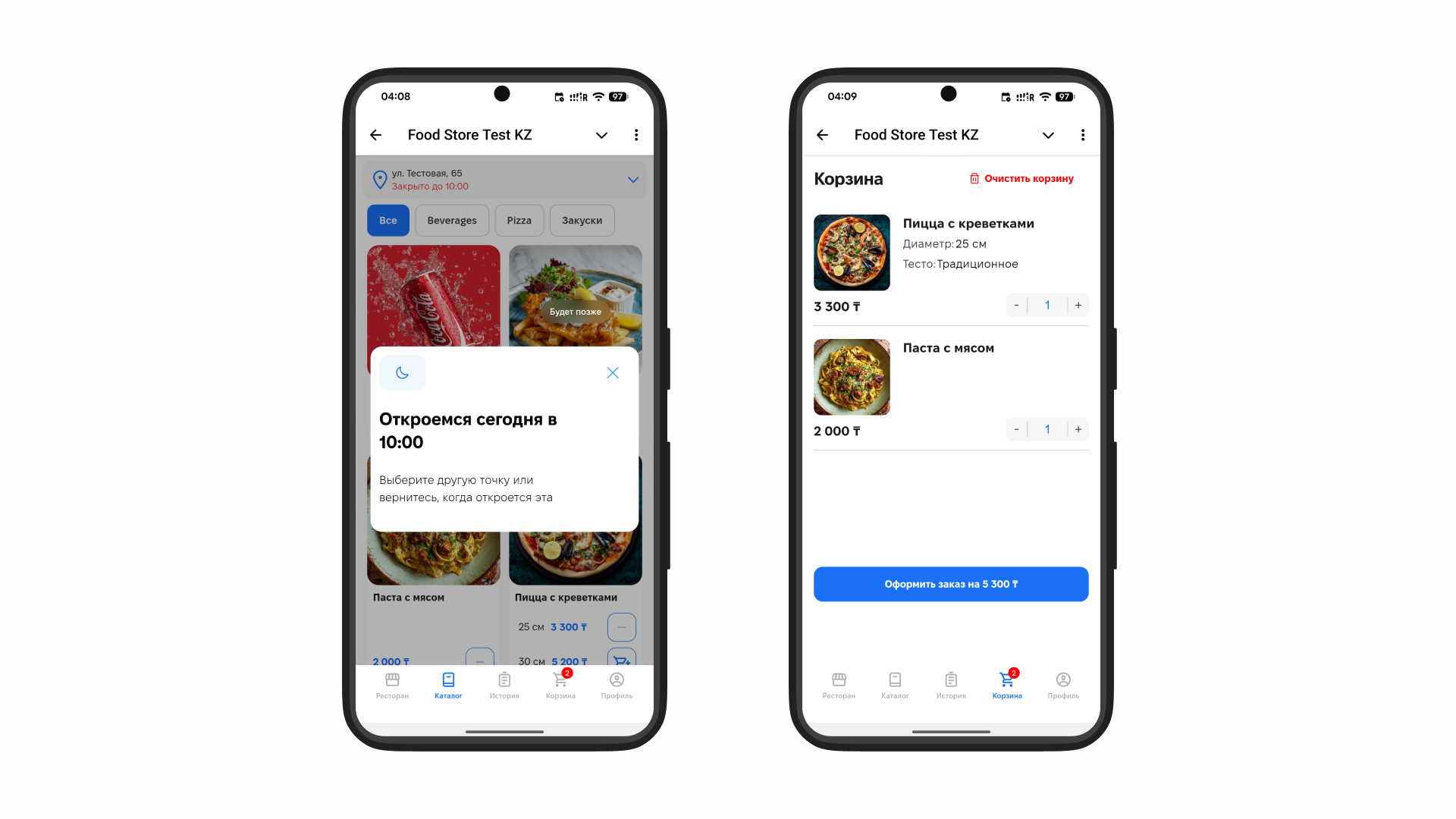
- Menú digital — catálogo con fotos de los platos, precios y filtros por categorías. Requisito clave: actualidad.
- Carrito y realización de pedidos — elección de tipo (salón, recogida, entrega), dirección, horario.
- Pago online — tarjetas, СБП, Apple Pay/Google Pay. Cuantas más opciones, mayor conversión.
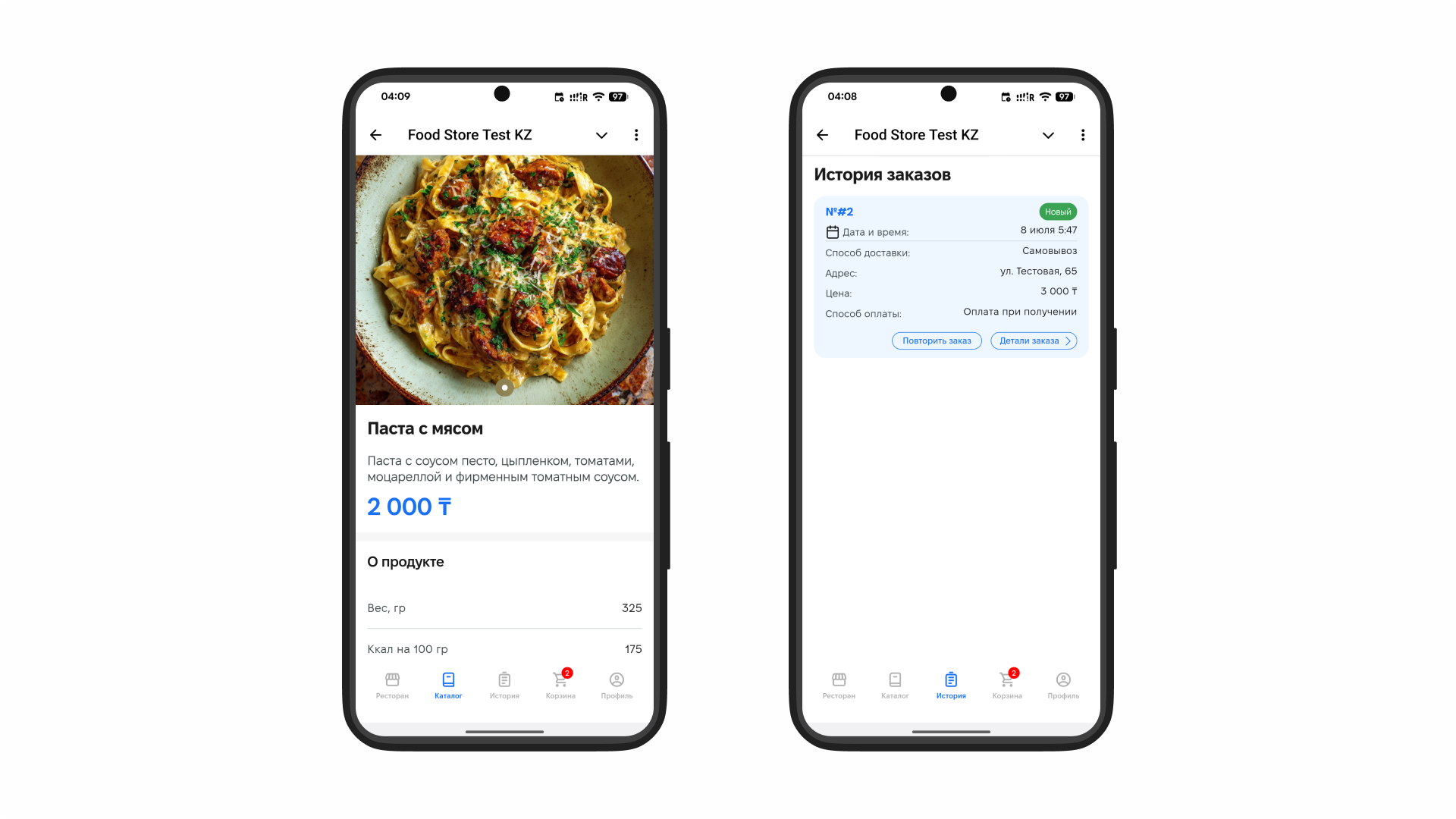
- Estado del pedido — el cliente debe entender en qué fase se encuentra su comida.
- Programa de fidelidad — puntos, cashback, programa de referidos.
- Notificaciones push — estado del pedido, promociones, recordatorios. En Telegram esto funciona a través de un bot sin permisos adicionales.
- Reserva de mesa — fecha, hora, número de comensales, confirmación.
Funciones para propietarios de la aplicación y empleados del establecimiento
Una buena aplicación para restaurante no es solo una vitrina para el cliente, sino también una herramienta de gestión del negocio:
- Panel administrativo — edición del menú en tiempo real, gestión de promociones y precios.
- Gestión de pedidos — recepción, estados, paso a cocina, control de la entrega en una misma interfaz.
- Analítica — estadísticas de ventas por plato, por horario, por fuente de pedido.
- CRM — historial de clientes, sus preferencias, ticket medio para ofertas personalizadas.
- Integraciones — conexión con sistemas de caja (r-keeper, iiko), sistemas de entrega, 1C.
Tecnologías y herramientas para desarrollar la aplicación
Telegram Mini Apps
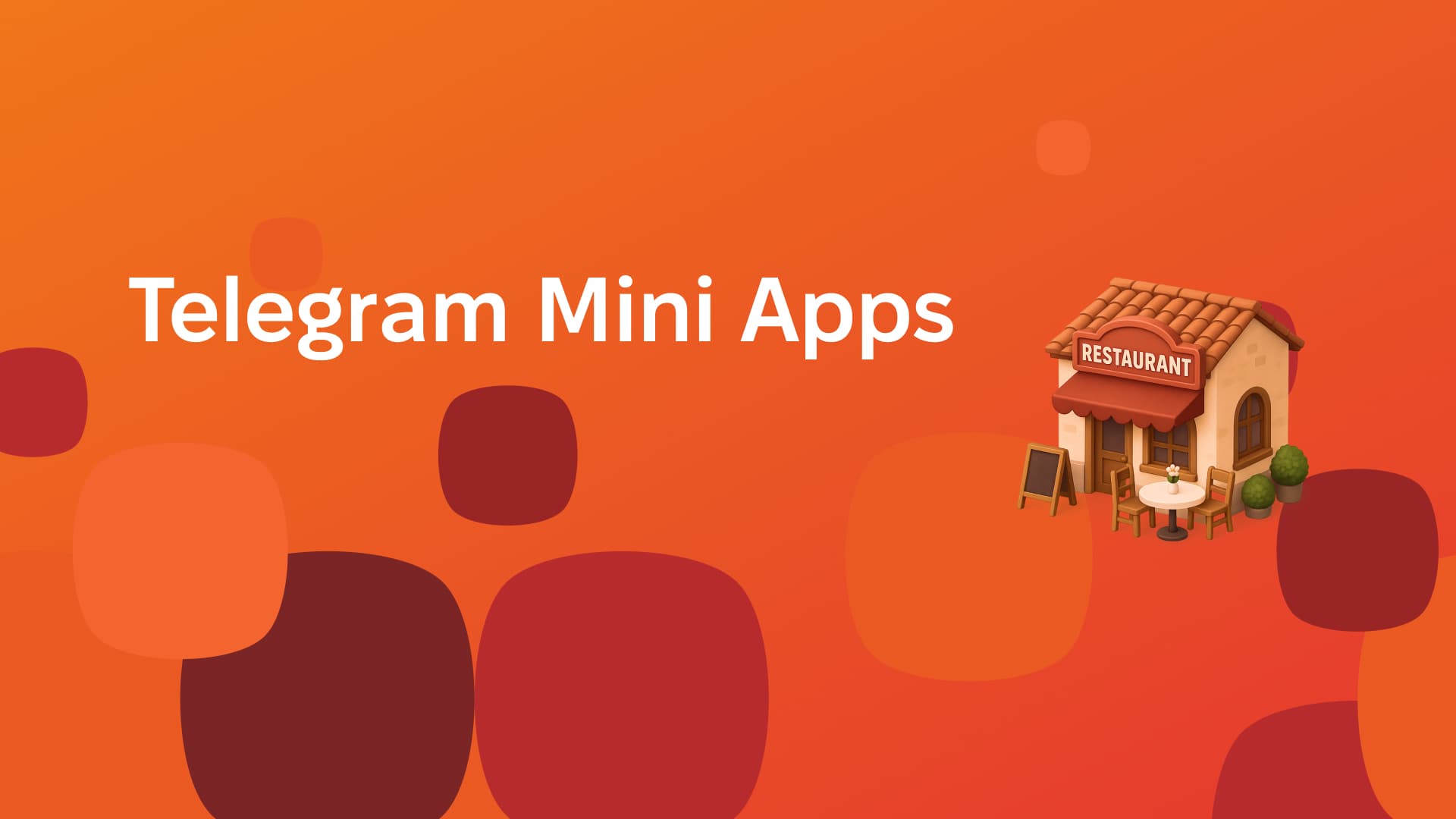
Telegram Mini App es una aplicación web móvil integrada en Telegram. Técnicamente es una interfaz web «empaquetada» con la API de Telegram. Se ejecuta dentro del mensajero y se ve como una app nativa.
Para el negocio de la restauración es un formato conveniente:
- El usuario ya está autenticado mediante Telegram ID — no hay barrera de registro.
- Notificaciones a través del bot sin permisos adicionales.
- Las actualizaciones se publican al instante, no es necesario revisión en las tiendas.
- Funciona en iOS, Android y escritorio.
Con el constructor Mini Apps Builder se puede montar una aplicación para restaurante o cafetería en 30–60 minutos: conectar el menú, configurar la entrega, añadir pago y programa de fidelidad. Sin una sola línea de código.
Aplicaciones móviles tradicionales
Las aplicaciones nativas para iOS (Swift) y Android (Kotlin) ofrecen máxima flexibilidad, pero con un coste de entrada elevado: desde $20 000, plazo — 4–8 meses. Las soluciones multiplataforma en Flutter o React Native ahorran un 30–40% del presupuesto con un resultado similar. En ambos casos es necesario pasar la revisión en App Store y Google Play.
Constructores de aplicaciones
Los constructores no-code son más rápidos que un equipo de desarrollo, pero requieren publicación en las stores — eso implica varios días de retraso por cada actualización, además de la necesidad de cumplir los requisitos de Apple y Google.
| Criterio | Telegram Mini Apps | Constructor | Desarrollo nativo |
|---|---|---|---|
| Velocidad de lanzamiento | 30–60 minutos | Días/semanas | Meses |
| Costo de inicio | ~$50/mes | Suscripción | desde $20 000 |
| Revisión en stores | No necesaria | Requerida | Requerida |
| Autenticación | Telegram ID | Depende de la plataforma | Cualquiera |
Cómo crear una aplicación para restaurante
Si quiere crear una aplicación móvil para restaurante lo más rápido posible — aquí tiene un escenario usando Telegram Mini Apps:
- Regístrese en Mini Apps Builder — es gratis.
- Cree un bot en Telegram a través de @BotFather (2 minutos).
- Configure la aplicación: añada el menú con fotos, indique los métodos de entrega, conecte el pago.
- Vincule la Mini App al bot — el constructor de aplicaciones para restaurante está listo.
- Comparta el enlace a través del canal de Telegram, sitio web o código QR en las mesas.
Si necesita desarrollo nativo: product discovery (2–4 semanas) → diseño (2–3 meses) → desarrollo (3–6 meses) → pruebas y lanzamiento (1 mes). En total 6–12 meses desde la idea hasta la publicación.
Casos
Una cadena de cafeterías lanzó una Telegram Mini App con menú, pedido anticipado y programa de fidelidad mediante Mini Apps Builder en un día. En un mes, el 40% de los pedidos llegaba a través de la aplicación. La razón principal fue la ausencia de barrera de registro: los clientes ya estaban en Telegram.
Un restaurante con delivery pagaba al agregador un 20% de comisión. Tras lanzar su propia app, la proporción de pedidos directos aumentó al 35% en tres meses — el ahorro cubrió parcialmente el coste de la suscripción.
«Дринкит» — una cafetería del ecosistema Dodo Brands — digitalizó completamente el pedido: entrega inteligente, menú personalizado, pedido anticipado. Resultado: 66% de todos los pedidos a través de la aplicación, calificación 4,8 en ambas stores.
Costo de desarrollo de una aplicación para restaurantes
Telegram Mini App mediante Mini Apps Builder: ~$50 al mes, lanzamiento en 30–60 minutos. Incluye todo lo necesario: menú, pedido, pago, entrega, analítica.
Constructor no-code con publicación en stores: $30–150/mes + cuenta de desarrollador ($25 Google Play, $99/año App Store).
Desarrollo nativo a medida: desde $20 000 por proyecto, 4–8 meses. Soporte — otros 15–20% del coste anualmente.
Para la mayoría de restaurantes y cafeterías que solo están lanzando su aplicación móvil, la estrategia óptima es empezar con Telegram Mini App, comprobar la demanda y la conversión, y luego escalar si es necesario.
5 consejos para crear un servicio demandado
1. Empiece por el problema, no por las funciones. ¿Qué genera inconvenientes al cliente ahora? ¿Colas, menú poco claro, imposibilidad de pedir con antelación? Resuelva eso primero.
2. No copie a los agregadores. Su aplicación no compite con Yandex.Eda, sino con la falta de un canal conveniente para su establecimiento concreto. Hágala personal: historial de pedidos, repetición rápida de platos favoritos, trato por nombre.
3. Lance rápido y mejore de forma iterativa. Un MVP con menú básico y pedido más feedback real de los clientes es mejor que medio año de desarrollo a ciegas.
4. Integre marketing desde el primer día. Códigos QR en las mesas, publicaciones en redes, bono por el primer pedido vía app — todo eso debe prepararse en paralelo al lanzamiento.
5. Vigile la conversión, no solo el diseño. Una interfaz bonita es agradable, pero el indicador clave es la conversión de visualización del menú a pedido completado. Si es baja, algo falla en el recorrido del usuario.
Conclusión y recomendaciones de expertos
Desarrollar una aplicación para restaurante en 2026 ya no es la pregunta «si es necesario», sino «de qué manera». Si su negocio opera en Rusia, la CEI u otro país con alta penetración de Telegram — Telegram Mini App mediante el constructor Mini Apps Builder dará un producto funcional en un día, sin revisión en stores y sin programadores.
Si su audiencia no usa Telegram o le importa estar presente en App Store/Google Play — considere un constructor no-code. El desarrollo nativo está justificado cuando hay integraciones complejas, altas cargas y presupuesto desde $20 000.
Recomendación principal: no postergue el lanzamiento hasta la «solución perfecta». Lance un producto mínimamente viable, obtenga datos de clientes reales — y desarrolle a partir de ahí.
Preguntas frecuentes
¿Se puede desarrollar una aplicación para restaurante sin programador? Sí. Con el constructor Mini Apps Builder esto lleva 30–60 minutos sin una sola línea de código.
¿Hay que pasar la revisión de App Store y Google Play? Para Telegram Mini Apps — no. Para aplicaciones nativas y constructores que publican en stores — sí, 1–5 días por cada lanzamiento.
¿Qué funcionalidad es obligatoria al inicio? Menú, carrito, realización de pedido, pago, notificaciones. Programa de fidelidad y reservas se pueden añadir después.
¿Funciona Telegram Mini App en iPhone? Sí. Telegram está disponible en iOS, Android y escritorio. La Mini App se ejecuta en todas las plataformas.
¿Cómo conocerán los clientes la aplicación? Códigos QR en las mesas, publicaciones en el canal de Telegram y en redes sociales, bono por el primer pedido. Sin un anuncio activo, la aplicación no se encontrará.
- IntroducciónVentajas de las aplicaciones móviles para restaurantesQué tipos de aplicaciones hay para restaurantesFuncionalidad de la aplicación para clientes de restaurantesFunciones para propietarios de la aplicación y empleados del establecimientoTecnologías y herramientas para desarrollar la aplicaciónTelegram Mini AppsAplicaciones móviles tradicionalesConstructores de aplicacionesCómo crear una aplicación para restauranteCasosCosto de desarrollo de una aplicación para restaurantes5 consejos para crear un servicio demandadoConclusión y recomendaciones de expertos